Your browser does not support SVG

A traditional grape harvest to celebrate the harvest

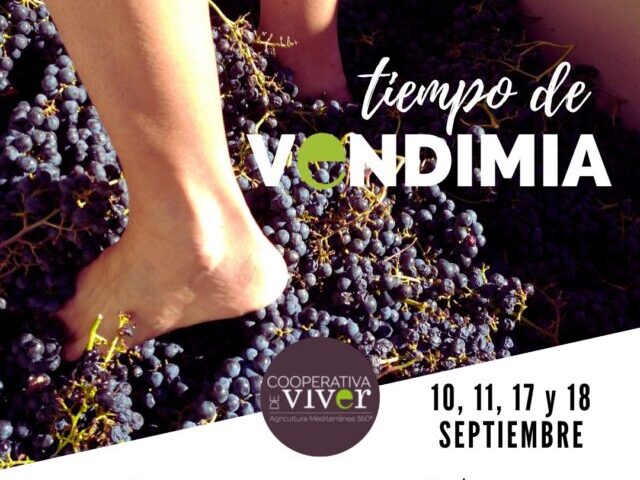
Vendimia tradicional con pisado de uva tinta en el lagar
September 2, 2022.—The Viver Cooperative is organizing a new edition of “Harvest Time”, taking advantage of an excellent harvest that is nearly double last year’s production.

The event, which will take place on September 10, 11, 17, and 18 starting at 10:00 a.m., will involve picking grapes by hand in the vineyard and then treading them in the winery to make grape juice the old-fashioned way—with your feet. There will also be a wine tasting with appetizers in the vineyard itself and a brunch to wrap up the day. Participants will be able to take home a sample of the must they produced, as well as a complimentary bottle of wine from the Cooperative.

A good vintage

Despite a disastrous year for some crops, such as olives and almonds, due to the weather and the recent devastating fire in Bejís—the agricultural and economic impacts of which are still being assessed—the vineyards are enjoying an excellent season. The Viver Cooperative, with approximately 12 hectares of vineyards, expects to harvest nearly 40,000 kg of grapes—twice as much as last year, when a mildew infection wiped out virtually the entire Tempranillo crop. “The quality of the grapes this year is very good, both in terms of disease resistance and organoleptic characteristics, and the quantity is also very good,” notes Paco Ribelles, an agricultural engineer at the Cooperative. So far, the white Chardonnay variety has been harvested, yielding about 2,000 kg of grapes, and next Monday, September 5, the harvest of the red varieties—which make up the majority— is expected to begin. Tempranillo leads the production, with an expected harvest of about 16,000 kg; followed by Syrah and Cabernet Sauvignon, with approximately 8,000 kg each; Merlot, with 4,000 kg; and Garnacha, with an estimated yield of 1,000 kg.

Native Varieties as a Differentiating Factor

The Viver Cooperative is also reviving native grape varieties that existed before the arrival of phylloxera in 1915, a pest that drastically disrupted Viver’s great winemaking tradition, which dates back to the 2nd century B.C. with the arrival of the Romans in what is now the Alto Palancia region. These varieties—Mondragón, Morenillo (also found in the Terra Alta region of Tarragona), and Pampolat de Sagunt—have been revived through grafts from cuttings preserved at the Botànic de Valencia and the Institut Valencià d’Investigacions Agràries (IVIA), although they are still in the observation phase to see how they adapt to the soil and how their winemaking parameters evolve. Even so, a harvest of nearly 1,500 kg is expected across the three varieties, given that these are young vines—barely 4 years old—that have not yet reached their full potential.

Wine Tourism and Local Wines

“Harvest Time” is one of the wine tourism initiatives that the Viver Cooperative is promoting to revitalize the region and highlight its wines, which are included in the “Vins de Castelló” Protected Geographical Indication. For the past six years, the cooperative has been committed to producing high-quality, locally sourced wines that will restore Viver’s place of honor in the wine production of the Valencian Community and place it on par with other widely appreciated and recognized products, such as its extra virgin olive oil “Lágrima.”

You were not leaving your cart just like that, right?

¡Espera! No dejes escapar tus productos

Estos productos están a un solo clic de ser tuyos. Antes de irte, por favor introduce tu correo electrónico y guarda tu carrito para más tarde para no quedarte sin ellos.

Lista de espera Te avisaremos cuando el producto vuelva a estar disponible. Por favor, déjanos una dirección de correo electrónico válida.
0
Carrito
Tu carrito está vacíoVolver a la Tienda

PREMIOS

CON LA COLABORACIÓN DE

