2025 is the International Year of Cooperatives. Discover the importance of agri-food cooperatives for the advancement of rural communities.
At its meeting on June 19, 2024, the UN General Assembly declared 2025 the International Year of Cooperatives under the theme “Cooperatives Build a Better World.” Of all the various sectors in which this social economy model operates, we will focus here on the
Agri-food cooperatives are much more than a business model; they are an economic, social, and cultural engine that drives rural development in Spain. Since their inception, cooperatives have been established as entities made up of people who come together to carry out business activities with common goals. Thanks to a democratic structure and an operational model based on teamwork, these organizations have succeeded in establishing a management model that benefits both farmers and the regions where they operate.
Therefore, agri-food cooperatives, such as the Cooperativa de Viver, are key to fostering a strong and sustainable local economy, preserving traditions, and creating jobs in regions where agriculture remains the mainstay of community life.
Economic and Social Impact
In regions such as Castellón, agri-food cooperatives not only help maintain the production of high-quality food but also generate jobs and income for rural families. According to data from
Cooperatives allow farmers to come together to share resources, knowledge, and technologies, which leads to more efficient crop management and greater competitiveness in the market. This
The data underscore the importance of the agri-food cooperative sector
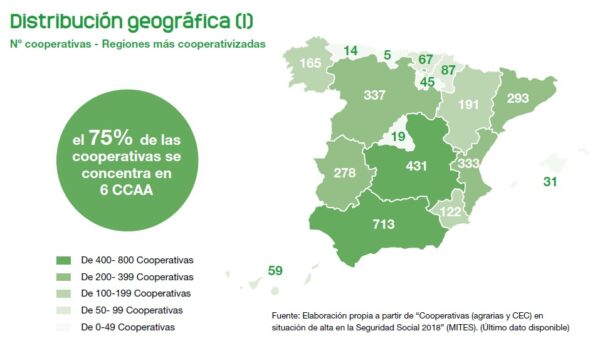
According to data from the Socioeconomic Observatory of the Spanish Agri-Food Cooperative Sector (OSCAE), the agri-food cooperative sector comprises more than one million members nationwide, generating revenue of 43,207 million euros. These figures, which represent 69% of the value of Final Agricultural Production and 30% of the net sales of the Spanish food industry, attest to the impact and significance of this model on the country’s economy.
In addition, cooperatives provide direct employment to more than 122,600 people, mostly in rural areas. This makes them true drivers of development, not only because of their economic contributions, but also because of their ability to keep the social fabric alive in less populated areas and
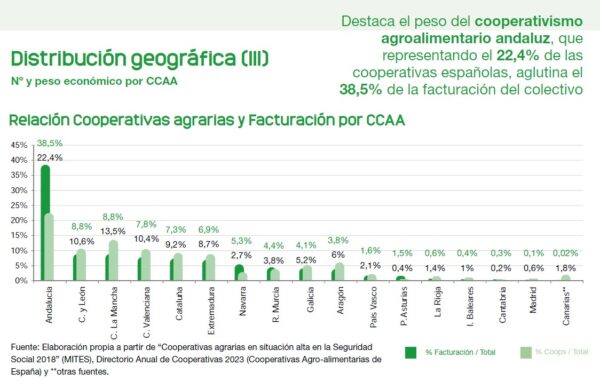
The Viver Cooperative is one of the 333 agri-food cooperatives registered in the Valencian Community, which account for 10.4% of all Spanish agri-food cooperatives and contribute 7.8% of total revenue, second only to Andalusia, Castile-León, and Castile-La Mancha, according to 2022 data from the OSCAE.
Cultural and Regional Benefits
In addition to its economic impact, the agri-food cooperative movement holds deep cultural value. These organizations preserve ancestral farming techniques, traditional products and recipes, and a strong sense of local identity. In the case of the Viver Cooperative, the
The success of cooperatives also extends to the social sphere, as they strengthen community cohesion. Collective projects foster opportunities for dialogue, innovation, and mutual support, creating collaborative networks that benefit the entire community. In this way, the cooperative model is not only a formula for economic survival but also for the revitalization of rural areas and the promotion of comprehensive development.
Steady growth
In recent years, agri-food cooperatives have shown a steady growth trend in terms of revenue, employment, and export activity. This growth, combined with their commitment to sustainability, allows them to continue investing in innovation and the improvement of agricultural practices, thereby ensuring high-quality products and a promising future for the rural sector.
The Viver Cooperative, for example, is a prime example of this model. Since its founding in 1990, it has been committed to