Your browser does not support SVG

Solar Power Threatens Agriculture in Viver

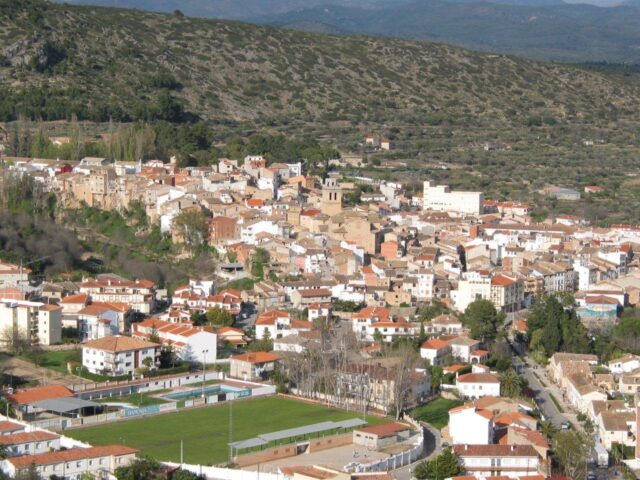
El municipio de Viver visto desde Santa Cruz
July 8, 2022.—The construction of a large-scale solar farm would result in the elimination of 7% of local agriculture, which is a well-established socioeconomic driver for the area.

The potential construction of a large-scale solar farm on more than 100 hectares of farmland in the municipality of Viver threatens the area’s main socioeconomic driver, as it would result in the elimination of 7% of local agriculture and 15% of the irrigation infrastructure that supplies the fields, in addition to causing a serious environmental impact by occupying both sides of the Ojos Negros Greenway. The Viver Cooperative and the San Francisco de Paula Irrigation Community are leading efforts to prevent the implementation of a project they consider “nonsensical,” as it seeks to replace a well-established economic activity that benefits the local population with a large power plant that offers no local benefits. In the statements submitted to the Regional Ministry of Sustainable Economy, Productive Sectors, Commerce, and Labor—by both entities, which are responsible for making agriculture in the area a model of success—they argue that the project has been “conceived, drafted, and proposed for approval with a profound lack of understanding of the territorial and socioeconomic reality of the location where it is intended to be implemented. This lack of understanding has not been remedied by an environmental, socioeconomic, territorial, or local planning study conducted with even the minimum required rigor,” as the proposal even goes so far as to claim that the main crop in the area is rain-fed grain, when in fact it is olive and almond trees.

Adverse effects on agricultural activity and the environment

The project to install the photovoltaic plant, promoted by the company Proyecto Fotovoltaico Aicrum-1-SL, without a genuine and comprehensive analysis of its economic, social, and environmental impacts and without public participation, would not only result in the loss of fully productive farms but also a significant loss of local jobs and income and, consequently, a slowdown in the growth of the local population. Furthermore, the project’s location is “openly contrary” to Viver’s General Urban Development Plan (PGOU) and its environmental and territorial assessment, and it is equally unjustified because it fails to safeguard the area’s environmental, cultural, and landscape values, nor does it use the least amount possible of land with high agricultural value, as stipulated by Decree-Law 14/2020 of the Valencian Regional Government on renewable energy. The macro-park would be located on both sides of the Ojos Negros Greenway and the path connecting the Greenway to the town center, in an area that—precisely because it is entirely cultivated, with no buildings or signs of degradation—offers visitors a space of unique beauty. At the same time, agritourism—promoted by the Viver Cooperative to revitalize the region and showcase its agri-food products—is emerging as a significant economic factor, one that requires a space that is as unindustrialized as possible. For this reason, the areas that remain most pristine and are most visible to visitors are not suitable sites for installing a photovoltaic plant at the expense of 100 hectares of farmland.

An Uncertain Future

The Viver Cooperative and the San Francisco de Paula Irrigation Community warn that, if this photovoltaic facility is ultimately authorized, it “will stifle the future and impoverish Viver, one of the few success stories in agriculture in the interior of the Valencian Community, ”which in turn contravenes “the spirit of the Valencian Community’s Agricultural Structures Law and the Valencian Regional Government’s policy against depopulation.” The project is planned for an area that would affect 73 hectares of the Irrigation Community’s land, eliminating nearly 15% of the total irrigated area, which would lead to an increase in fixed costs for the remaining members due to the forced reduction of that area, as well as a reduction in the staff dedicated to the management and maintenance of the overall network, which is 43.3 km long, with 125 hydrants serving 572 plots, and for which the total investment amounted to 4 million euros.

Viver, a Successful Agricultural Model

Agriculture in Viver is a true economic driver, with a direct economic value of nearly 6 million euros annually, which amounts to an average of 4,125 euros per hectare per year. The area intended for the macro-park, with its existing water supply and proper management, could produce 103 metric tons of walnuts and 269 metric tons of almonds, which would translate to 789,000 euros annually— nearly 90% more than the profits promised to landowners by the solar power project, which is owned by a British investment fund. Viver stands as a proud exception in an agricultural landscape in constant decline. While agriculture in Valencia has declined by 15.1%, the agricultural sector in Viver has grown by 4.1% in net area, and has done so through a complete modernization by converting dryland to irrigated land, with the latter increasing by 163.3% to reach 490 hectares, according to data from the Valencian Institute of Statistics (IVE). This figure contrasts with the overall decline in agricultural land that the Alto Palancia region experienced between 2002 and 2021, which fell by 21.6%. This trend is driven by the decline in farmland in neighboring towns such as Altura, where—despite an increase in irrigated land—the total agricultural area has fallen by 11.7% over the same period; Jérica, where it has decreased by 28.2%; or Segorbe, with 26.5% less net agricultural land, making Viver an exception within the sector. The marketing of agricultural products through the Viver Cooperative—a key entity in local and regional economic development in recent years—reflects the gradual increase in the value of the main crops (olive, almond, walnut, and grapevine), which generated nearly 2.3 million euros in direct revenue in 2021—a 139% increase over 2005. Employment in the agricultural sector in Viver also illustrates this exception, having increased by 2.1% between March 2021 and March 2022, according to figures from the Generalitat Valenciana’s ARGOS Information Portal, compiled in conjunction with public employment services, in contrast to the decline in agricultural contracts recorded at the provincial level, where there was a year-over-year drop of 4.75%, and across the Valencian Community as a whole, where the decline was 1.4% compared to the previous year.

You were not leaving your cart just like that, right?

¡Espera! No dejes escapar tus productos

Estos productos están a un solo clic de ser tuyos. Antes de irte, por favor introduce tu correo electrónico y guarda tu carrito para más tarde para no quedarte sin ellos.

Lista de espera Te avisaremos cuando el producto vuelva a estar disponible. Por favor, déjanos una dirección de correo electrónico válida.
0
Carrito
Tu carrito está vacíoVolver a la Tienda

PREMIOS

CON LA COLABORACIÓN DE

