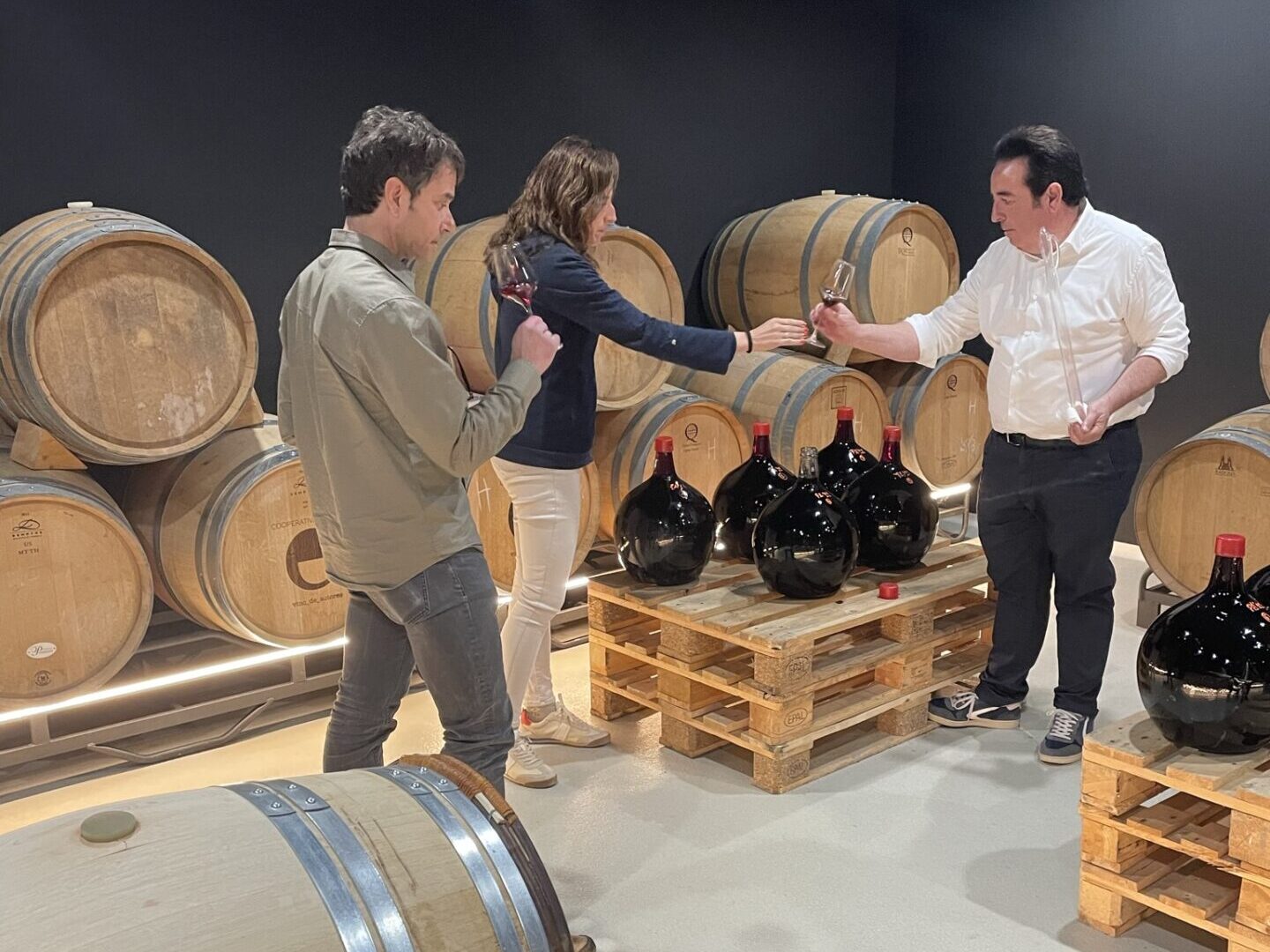
May 29, 2023.—The Viver Cooperative has succeeded in registering the native pre-phylloxera grape varieties Pampolat and Mondragón and has produced a limited edition of the first wine made from them.
The Valencian Community’s Vineyard Registry has officially added two new wine grape varieties (Vitis vinifera): Pampolat and Mondragón, two native red grape varieties from the Alto Palancia region that disappeared with the arrival of the phylloxera plague in the region in 1915. The Viver Cooperative has promoted and secured their inclusion in the registry after demonstrating “the age, significance, and local adaptation” of both varieties, which are now formally recognized and whose wines may be marketed. Four years ago, the Viver Cooperative launched a project to recover these native varieties after learning of their existence at the Valencia Botanical Garden and the Plant Health Service of the Regional Ministry of Agriculture. The first of these vines were grafted directly in the field, eventually covering an area of approximately 0.3 hectares where Pampolat, Mondragón, and Morenillo—an ancient native variety also native to the Terra Alta region of Tarragona—grow together. The vineyard has recently been expanded with 300 Pampolat vines grafted in a nursery; their cultivation is being prioritized due to the oenological possibilities they offer, and new Mondragón and Morenillo vines have also been grafted in the field, expanding the project to revive local varieties to 1 hectare.
A unique wine
The Viver Cooperative, which receives guidance from experts Pepe Mendoza and Maloles Blázquez through their oenological consulting firm Uva Destino, will launch this year a limited-edition, small-format release of the first wine made from Pampolat, a grape that is exhibiting very interesting qualities capable of producing a refined, balanced, and exceptionally delicate wine. In this way, the cooperative is committed not only to the quality of its products but also to highlighting its unique characteristics to bring unique and distinctive wines to the market that will restore Viver and the Alto Palancia region to the forefront of the Valencian wine sector. To raise awareness of this first and exclusive Pampolat wine, the cooperative will soon hold a launch tasting at its winery for wine lovers—both professionals and individuals—who will have the opportunity to be among the first to taste this unique variety. However, the Pampolat wine is not expected to go on sale until next season, when this ancient grape variety will also be certified under the “Vins de Castelló” Protected Geographical Indication, to which the wines of the Viver Cooperative belong.
A Commitment to Originality
Paco Ribelles, director of the Agriculture Division at the Viver Cooperative, notes that “the conservation of local varieties that are—and were—found exclusively in a given territory is vital for restoring genetic biodiversity and, therefore, for enriching an area’s genetic and cultural heritage.” The Center for the Conservation and Improvement of Valencian Agrodiversity (COMAV) at the Polytechnic University of Valencia conducted genetic analyses of the samples obtained to confirm that they were, in fact, the Pampolat and Mondragón varieties. Likewise, the Center for Ampelography and Viticulture and the “El Encín” Grapevine Germplasm Bank of the Autonomous Community of Madrid conducted an in-depth characterization analysis of both grape varieties, which had already been cited as present in Castellón in 1914 by agricultural engineer Nicolás García de los Salmones in his article “The Grape Varieties Cultivated in Spain and the Wines Produced,” published in 1935 by the Ministry of Agriculture. “The Viver Cooperative, as a social and economic entity in the region, feels the need to revive these grape varieties and showcase their value. Incorporating wines into our winery that—because they are made from grape varieties unique in the world—are original and can position themselves in the market by expressing their oenological potential is part of our strategy and responsibility,” adds Paco Ribelles, who also highlights the “opportunity to create jobs, retain the local population, and revitalize rural areas” in connection with the project to revive Viver’s winemaking tradition.